Paris does not have the cocktail history of London or New York, but in the last fifteen years it has built one of the most interesting bar scenes in Europe. Three Parisian addresses sit in the World's 50 Best Bars, a handful of others are genuinely world class, and behind the right pizzeria or laundromat you will find some of the most atmospheric rooms for a drink anywhere. Here is an honest guide, arranged by what kind of evening you are looking for: a secret hidden away, a classic you can walk into, or the full hotel-palace treatment.
The speakeasy was an American invention. The Parisian version borrows the door but keeps the wine list, the eye for a beautiful room, and the unhurried sense that nobody is in a rush to go anywhere else.
Moonshiner
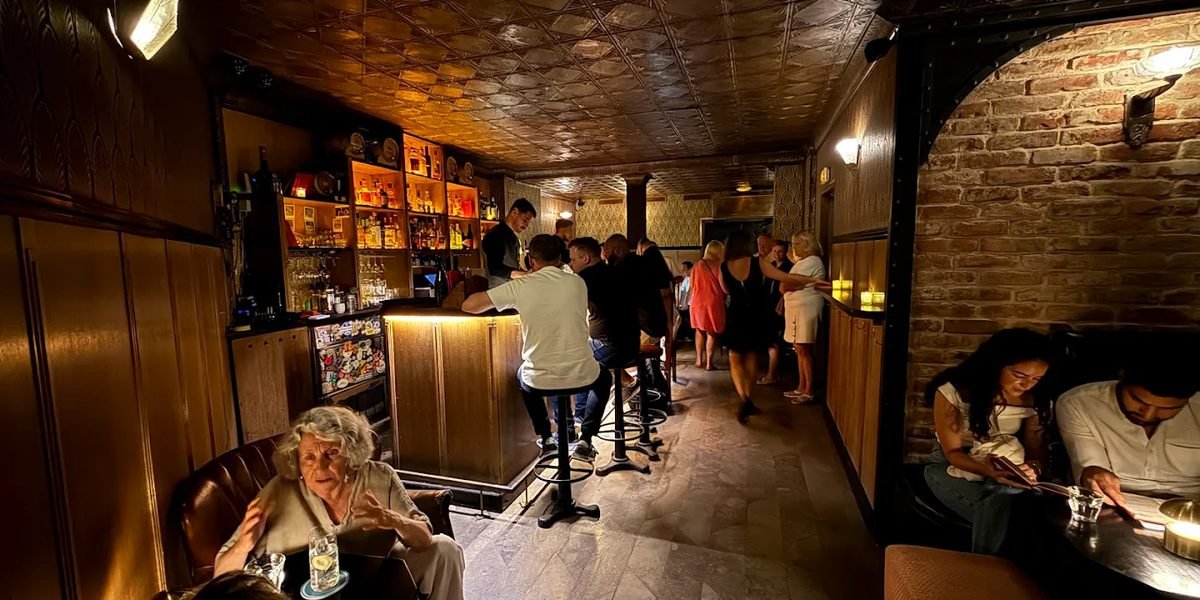
Walk into the Pizza Da Vito on rue Sedaine and you will see a pizzeria. Order a slice if you want. What most customers do not notice is the heavy metal door at the back, the kind you would expect to open onto a cold storage room. Push it, and you step directly into 1925.
The Moonshiner has been the reference Parisian speakeasy since 2013, opened by the same team behind Dirty Dick at Pigalle. The room is small, low-ceilinged, lit by candles and the glow from a gramophone. There are eighty-five whiskies behind the bar and a cocktail list that reads like a postcard collection. The ambition is serious: a recent rotation by chef barman Davide Piccone Casa included a spicy Negroni with rum, habanero-rhubarb jam and agar agar, and an Alaska revisited with a Normandy calvados, Chartreuse and amontillado. The prices stay honest for what this is. Expect around fifteen euros for a cocktail.
The Moonshiner also runs a guest bartending festival each March, the Moonshiner Live, which brings in bartenders from across Europe and pairs their cocktails with live music. If the speakeasy genre has a single flagship in Paris, this is it.
Candelaria
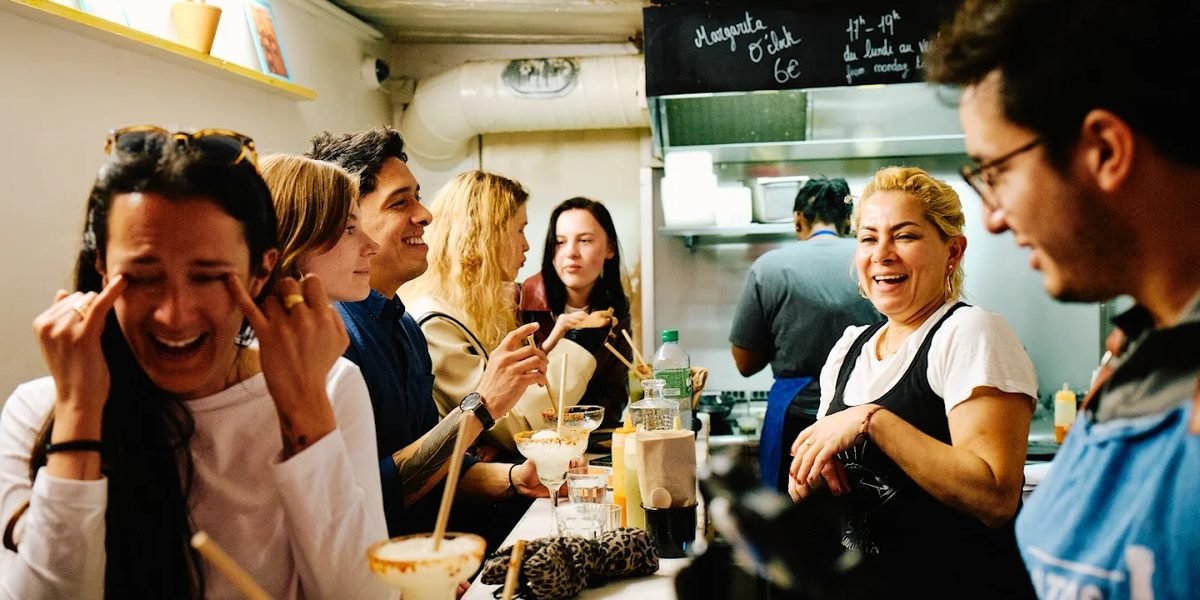
Candelaria opened in 2011 and was, along with the Experimental Cocktail Club and the Prescription, part of the small group of addresses that rewrote the Paris bar scene in the early 2010s. The front is a genuine taqueria serving some of the better tacos in the city. The back, reached through a discreet door at the end of the room, is a cocktail bar with exposed stone walls and the pleasing atmosphere of a room designed by people who knew exactly what they were doing.
The bar side works with mezcal, tequila and a rotating seasonal menu. The team changes the card regularly and puts real thought into each iteration. The crowd is young, the music is present without being loud, and unlike most speakeasies the format does not rely on a concept beyond the simple pleasure of a small, well-run room serving drinks that are better than they strictly need to be.
Lavomatic
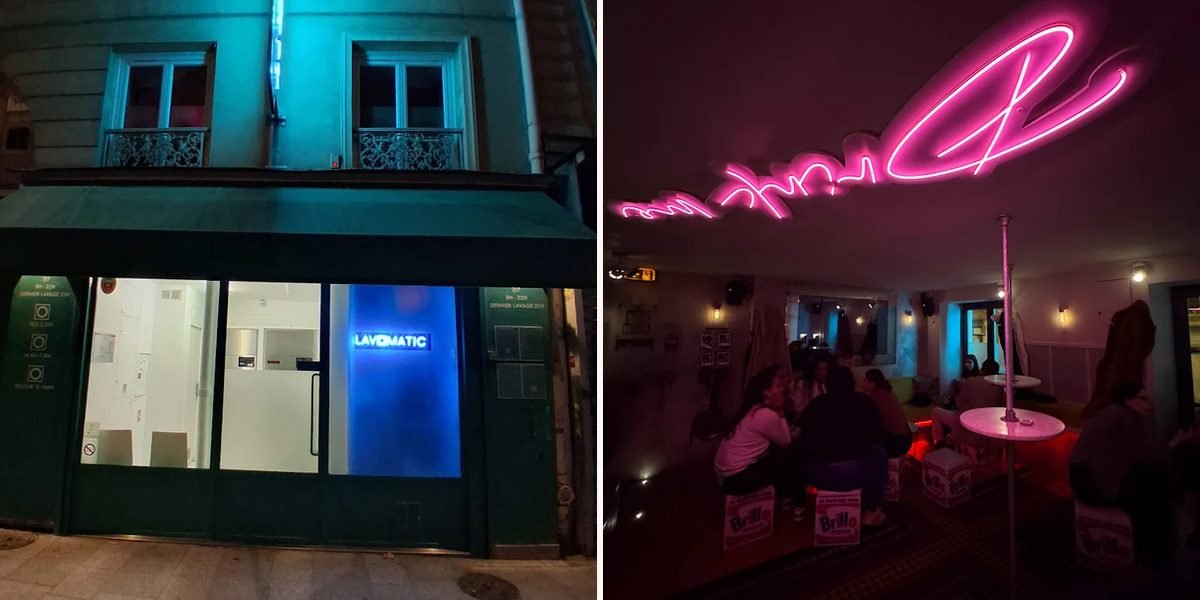
The Lavomatic is the most literal interpretation of the speakeasy concept in Paris. From the street, you are standing in front of a working laundromat. Machines turning, the smell of detergent, the neon strip above the door. To get into the bar, you push a button on one of the washing machines and a hidden staircase behind it leads you up to the first floor.
Once upstairs, the room is pure early 1980s, more Pedro Almodóvar than Prohibition: pop-coloured poufs, indoor swings at the back, plants and neon. The cocktails lean creative without trying too hard. Fresh fruit, short menus, a bottle of wine if you prefer. It is not a room for a serious negroni ritual. It is a room for a date, or for the kind of night where the story of how you got in matters as much as what you drink once you are there.
Little Red Door
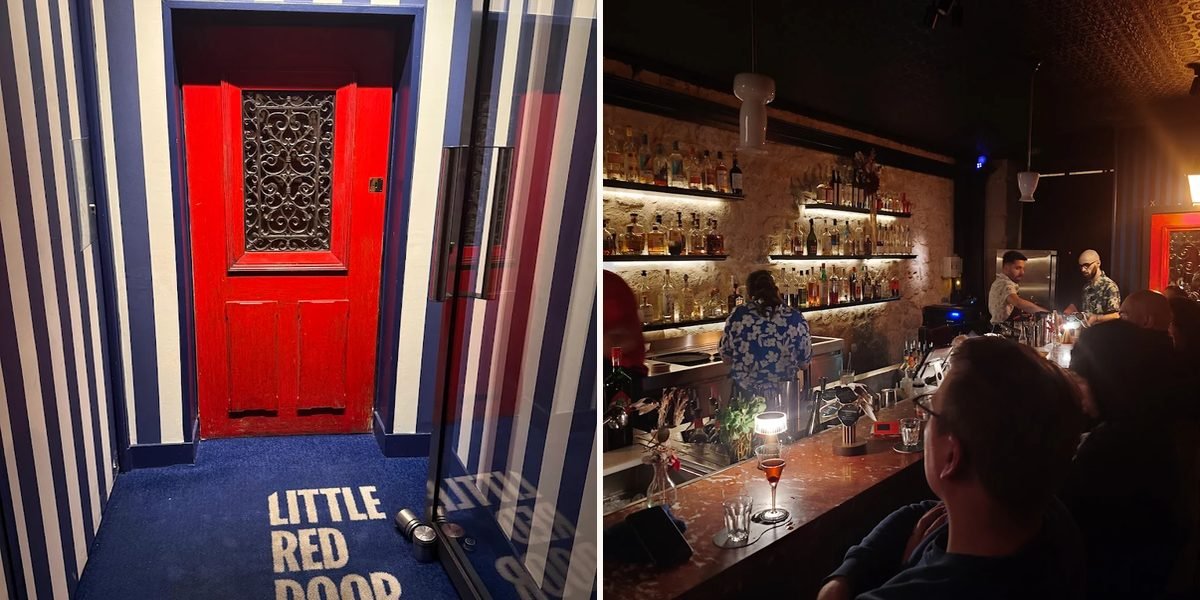
The Little Red Door has been the most internationally recognised cocktail bar in Paris since it opened in 2012. Nine appearances on the World's 50 Best Bars list, a globally respected reputation for conceptual menus built around art, architecture or social sciences. You walk straight in. The door is painted red and narrow, the interior is a low-lit room with brick walls, velvet sofas and a small mezzanine at the back. The concept has always been the cocktails, not the theatre of getting to them.
The current menus are built around sustainability as much as flavour. The bar has a carbon footprint rating for every drink on its list, most of the ingredients are pre-batched to reduce waste, and almost nothing is thrown away at the end of service. It sounds worthy on paper. In the glass it translates into drinks that are cleaner, more concentrated, and more interesting than the typical Paris cocktail. Since July 2024 the bar has been run by Hugo Gallou and Hyacinthe Lescoët, the founders of the Cambridge Public House. Expect eighteen euros a drink and expect to be glad you paid it.
Le Syndicat
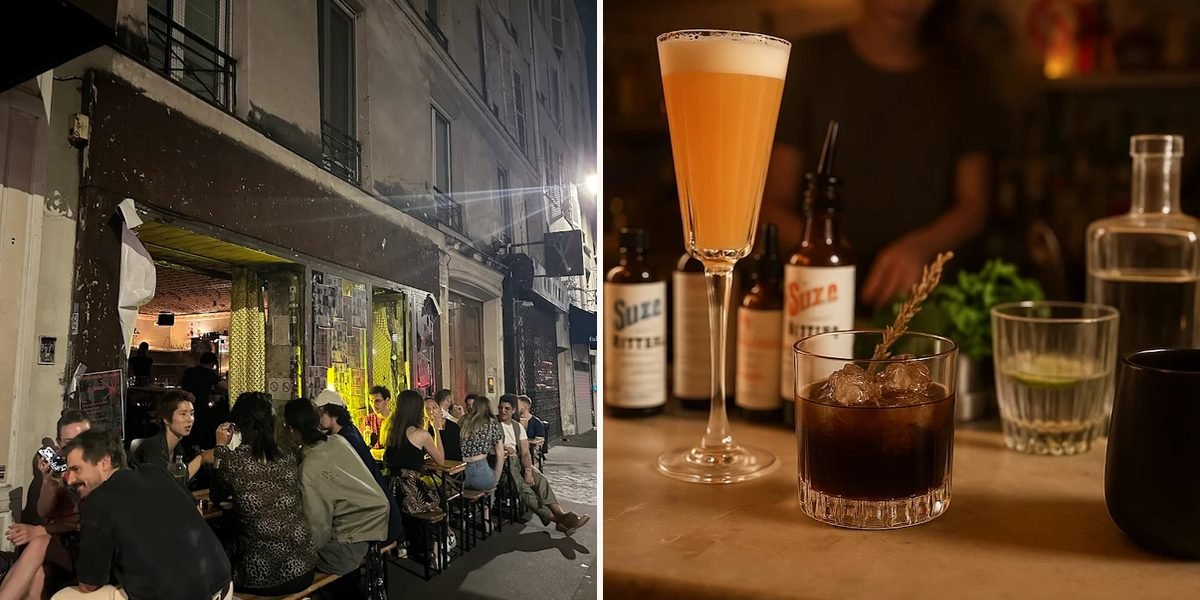
The full name is Organisation de Défense des Spiritueux Français, which gives you the concept without a cocktail being poured. Sullivan Doh and Romain Le Mouellic opened the bar in 2014 with a single rule. Every bottle on the back wall must be French. Cognac, armagnac, calvados, marc de Bourgogne, chartreuse, absinthe, whiskies from Brittany and the Jura, pommeaux, Basque liqueurs. Every cocktail is built from that palette and nothing else.
The facade is, deliberately, a mess. Covered in concert posters and graffiti, with no sign, no signage, no visible door if you are not looking for it. Once inside, the room is surprisingly refined: velvet curtains in gold leaf, soft carpet, a ceiling panelled in cork. The hip-hop soundtrack is a counterpoint to the serious agricultural ambition of the drinks. Cocktails are around thirteen to fifteen euros, which makes it the best value on this list by a wide margin, and the flights of unfamiliar French spirits are genuinely educational. It is regularly on the World's 50 Best list for good reason.
The Cambridge Public House
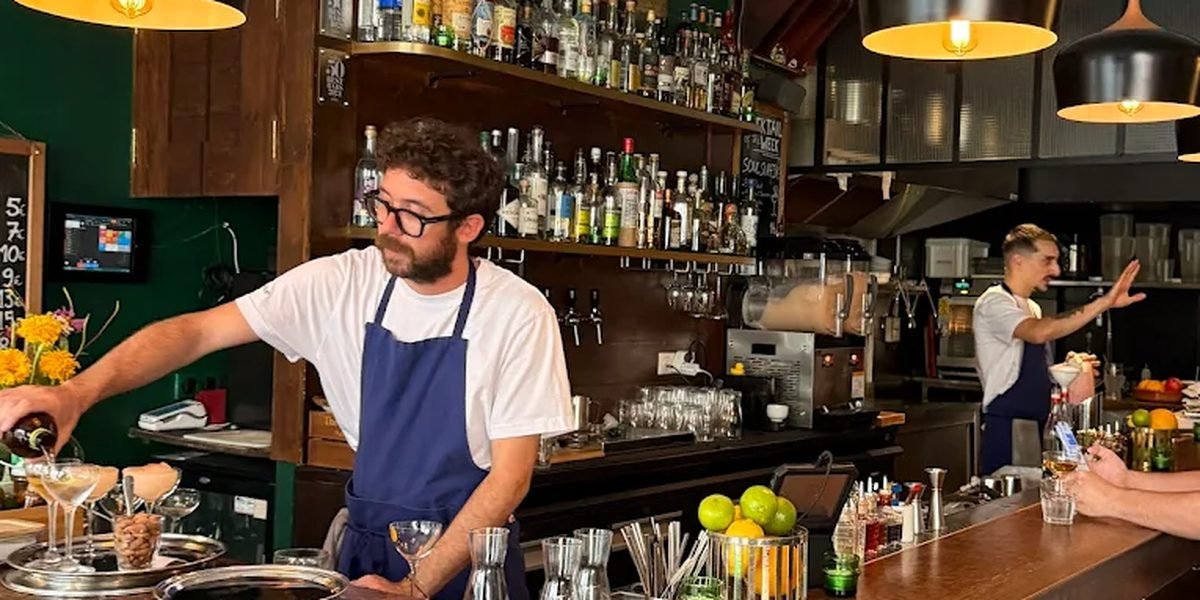
The Cambridge Public House was the highest-ranked French bar on the World's 50 Best Bars 2024 list at number nineteen, ahead of every other Paris address in the same year. The concept is apparently contradictory: a British pub in the Haut Marais that also happens to make some of the most technically ambitious cocktails in the city. Dark wood, a bar rail, taps pouring a locally brewed IPA, sausage rolls and pies in the kitchen, and behind the counter a team doing sous-vide infusions and seasonal menus with French farm-sourced produce.
The cocktails lean towards creativity without losing the plot. Rather than trying to impress through complexity, the bar works on precision: a few ingredients, treated carefully, combined in ways that reveal something unexpected. The pub frame keeps the room grounded. You are not in a temple. You are in a place where a pint and a cocktail sit on the same counter and nobody minds. The founders, Hugo Gallou and Hyacinthe Lescoët, also run the Little Red Door since July 2024. The Cambridge remains the one where their own voice is most directly expressed.
Bar Hemingway at the Ritz Paris
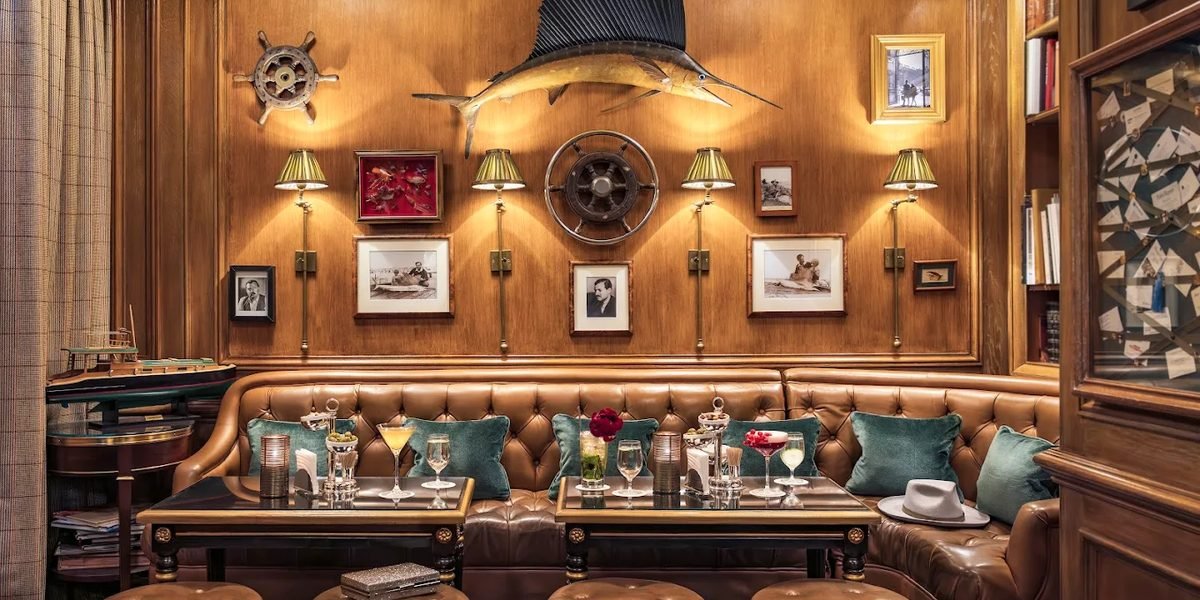
Only twenty-five seats, a single small room at the back of the Ritz, leather armchairs, walls covered with Hemingway memorabilia, no music save for the ice in the shaker. The Bar Hemingway has occupied this space since 1921, back when it was called Le Petit Bar and was the first upscale Parisian establishment to welcome unaccompanied women. Hemingway, Fitzgerald, Cole Porter, Gary Cooper all drank here. In 1944, Hemingway reportedly celebrated the Liberation of Paris at this bar with fifty-one dry martinis.
The mythology is heavy but the bar carries it well. Since June 2023 the head bartender is Anne-Sophie Prestail, who trained under Colin Field for seventeen years before succeeding him after his thirty-year tenure. Her style is precise, conversational, generous. She does not work from a long list. You tell her what you feel like, she improvises. Drinks arrive with the legendary Ritz bar snacks and, if you are a woman, a single rose on the rim of the glass. Cocktails start at thirty euros and climb quickly. A Serendipity, the bar's signature created by Colin Field, is the classic order.
Les Ambassadeurs at the Hôtel de Crillon
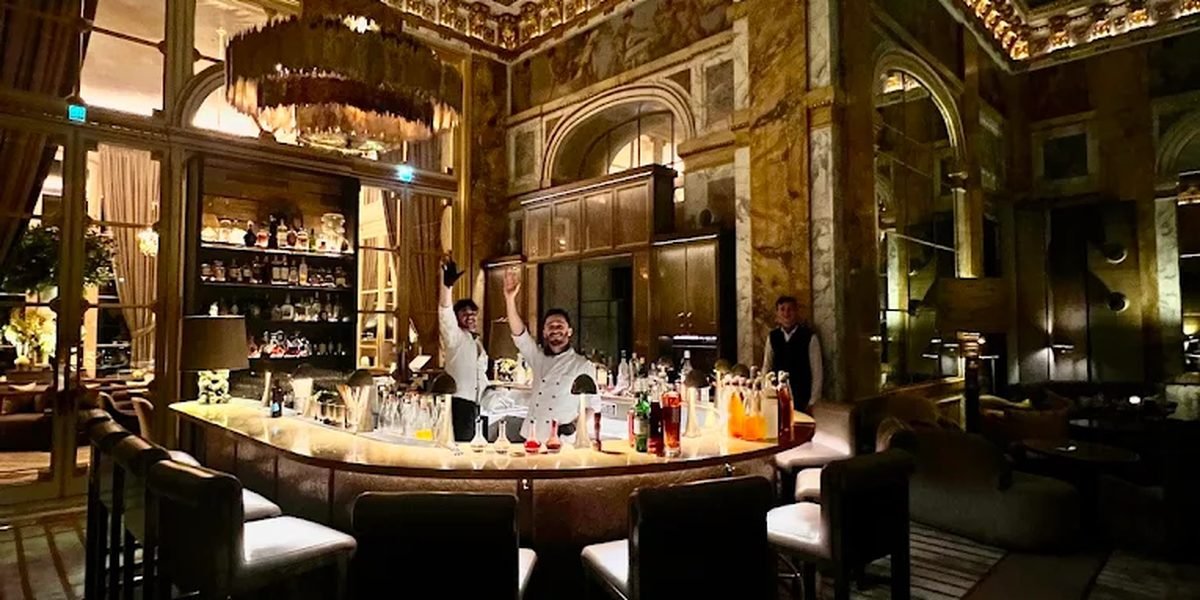
The Crillon occupies one of two twin buildings designed by Ange-Jacques Gabriel in 1758 to flank what is now the Place de la Concorde. The bar was once a salon in the private residence of the Duc de Crillon. Eighteenth-century cornices, painted ceilings, crystal chandeliers, and a terrace under the arcades that looks directly out onto the most theatrical public square in Paris.
Since 2017 the bar has been positioned at the entrance of the palace, which means you do not need to be a hotel guest to walk in. The current head barman Arnaud Volte runs a seasonal menu called A Sense of Memories, now in its autumn and winter edition, where each of the fifteen cocktails is built around a specific memory: the smell of damp wood, the taste of a birthday cake, the feeling of a walk by the sea. Cocktails cost twenty-nine euros. A live band plays every evening from eight.
Bar Joséphine at the Lutetia
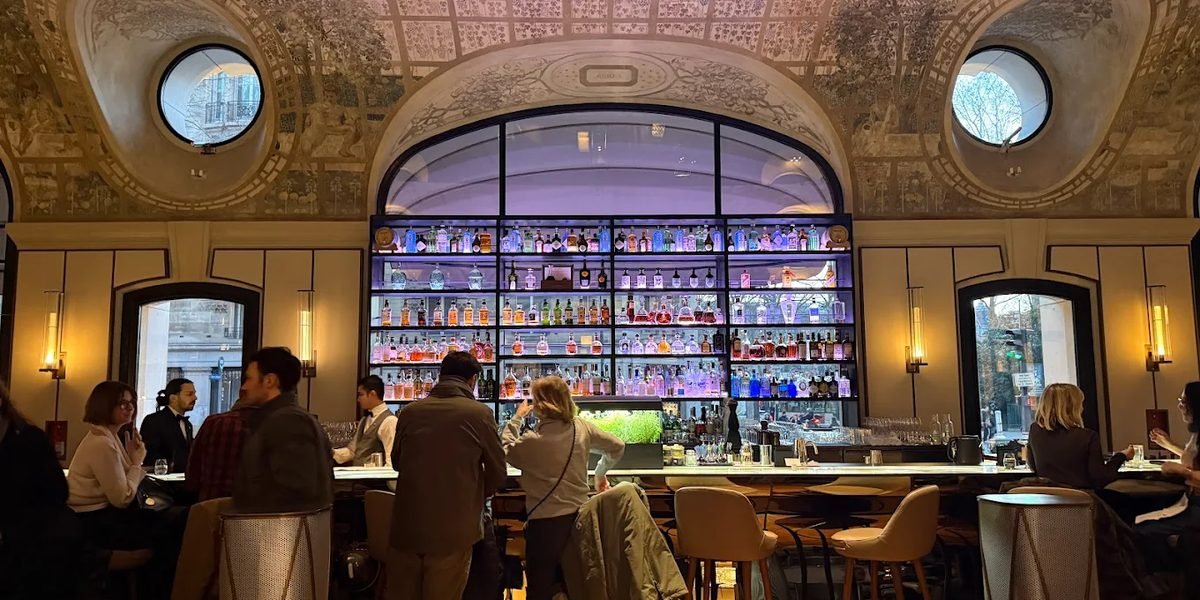
The Lutetia, inaugurated in 1910, is the only palace on the Left Bank. Before the second world war it was the intellectual salon of Paris: Picasso, Cocteau, Matisse, Joyce, Beckett, Sartre, Camus, Saint-Exupéry, Gainsbourg. Joséphine Baker, the bar's namesake, lived here and would sometimes come down in the evening to sing at the bar. The room has been preserved with genuine care. During the 2014 to 2018 renovation, a ceiling fresco painted in 1910 by Adrien Karbowsky was discovered under six layers of paint and restored over seventeen thousand hours of work.
The head barman Nicola Battafarano, originally from Formia in Italy, has built a menu with ten signature cocktails each named after a Joséphine Baker song: J'ai deux amours, Paris Paris, Sur les toits de Paris, Je ne veux pas travailler. Twenty-six euros a cocktail. Live jazz three nights a week. The long mirror-backed bar is where to sit if you want to see the bottles, the bartenders and the room all at once.
The Paris bar scene moves quickly. Bartenders change, menus rotate, some rooms quietly slide into self-parody. What you read here is true as of April 2026. When in doubt, ask the bartender what they like. If they have the answer to that question, the bar is worth your evening.